Parent Coaching: Empowering Parents to Support Their Child
Parents are a child’s strongest support system — but guidance matters. Parent coaching helps caregivers: When parents feel confident, children feel secure — and progress

Offering a personalized approach to consultation, psychological evaluations, and psycho-educational assessments.
Extensive experience working effectively with children and adolescents.
Services focused on clarity, evidence-based understanding, and practical recommendations for families.
Discover a pathway to understanding and support through autism screening – a widely used screening designed to identify and clarify the unique characteristics and needs of individuals with autism. We have a screening tool that assesses children aged 3 years and older through observational measures and structured interactions. It consists of several items that cover a range of areas, including social interaction, communication abilities, and behaviors. The items are scored based on the evaluator’s observations and interactions with the child. During the screening, the evaluator closely observes and rates the child’s behavior and interactions, considering factors such as body language, eye contact, social engagement, and communication skills. The scores obtained provide an indication of the severity of autism symptoms, with higher scores suggesting more significant challenges related to autism. The screening is not diagnostic on its own, but rather an aid in the diagnosis process. It helps other professionals gather information and make informed
Do you suspect that your child may be facing challenges with learning?
Are they struggling in school despite their best efforts? The key to exposing their true potential lies in learning disabilities testing, a comprehensive assessment designed to identify specific learning
difficulties and provide tailored interventions for academic success.
Learning Disabilities Testing is a specialized evaluation process aimed at diagnosing specific learning disabilities that may hinder a student’s
academic progress. This comprehensive assessment involves an array of tests, observations, and interviews conducted by our qualified
professionals. The results provide valuable insights into a student’s cognitive strengths and weaknesses, helping to create an individualized roadmap
for effective intervention.
Accurate Diagnosis: Learning Disabilities Testing offers a precise diagnosis, highlighting the specific challenges that a student may be facing in their
learning journey. This comprehensive evaluation ensures that educational interventions are targeted and tailored to meet their specific needs
Personalized Interventions: Once a learning disability is identified, the testing results serve as a foundation for creating individualized interventions.
With a deep understanding of the student’s strengths and weaknesses, educators, parents, and specialists can collaborate to develop strategies
that accommodate their unique learning style and empower them to overcome obstacles.
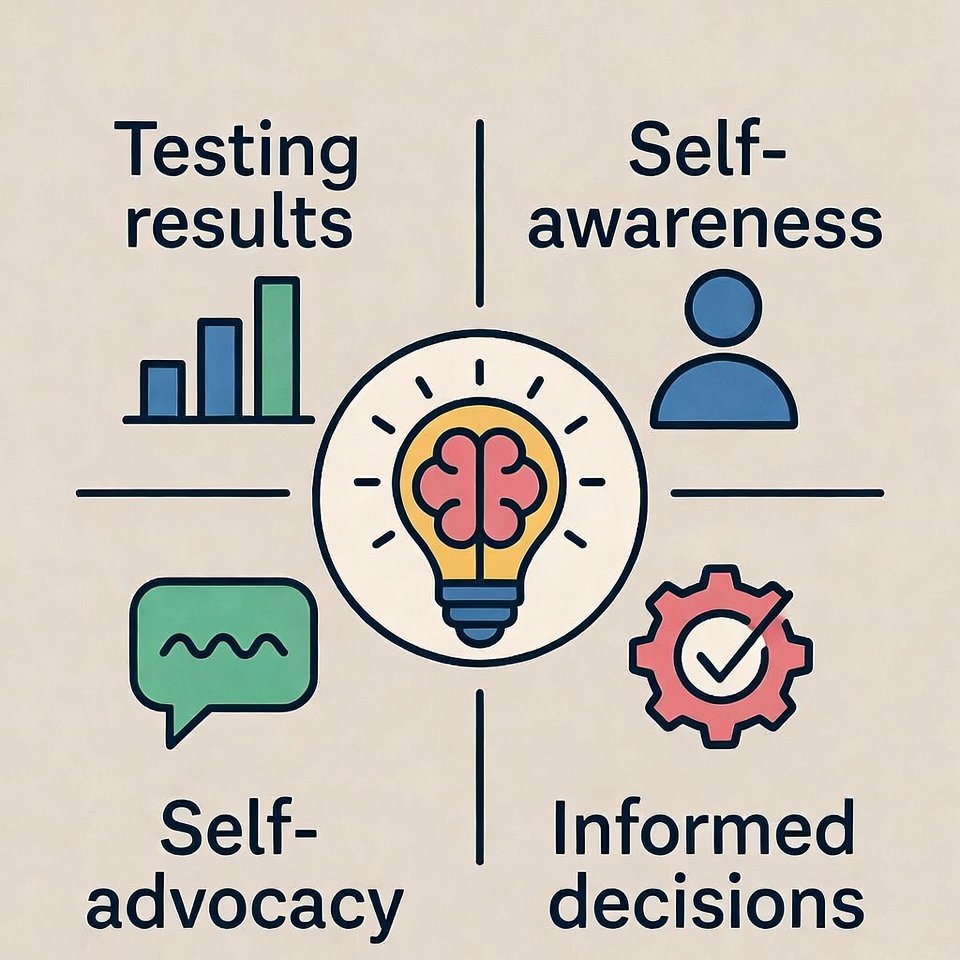
Building Self-Esteem: Through Learning Disabilities Testing, students gain a clearer understanding of their learning profiles. This knowledge helps build
self-awareness, self-advocacy skills, and self-esteem. Armed with this insight, they can confidently navigate their education journey, leveraging
their strengths and seeking support in areas where they face challenges.
Creating greater access: Obtaining an accurate diagnosis and implementing customized interventions at an early stage can profoundly impact a
student’s educational and personal growth. By addressing learning difficulties, students can maximize their full potential, while fostering a love for
learning and academic success
ADHD/ADD testing is a specialized evaluation process that aims to identify and diagnose attention deficit hyperactivity disorder (ADHD) and attention deficit disorder (ADD) in students. Through a combination of assessments, observations, and interviews, licensed professionals determine if a student meets the diagnostic criteria for ADHD/ADD. This process not only establishes a clear understanding of the student’s condition but also provides valuable insights for creating effective intervention strategies.
- Attention Deficit Hyperactivity Disorder (ADHD) and other issues related to executive functioning
- Dyslexia / reading disability
- Written language learning disorder, dysgraphia
- Dyscalculia (learning disability in math)
- Social-emotional concerns, such as mood and social skills
Empowering clients to embrace their strengths, transform challenges into opportunities, and rise to their fullest potential.
Trouble paying attention? Not getting work done? Feeling disorganized?
Reading slowly? Poor handwriting? Trouble solving math problems?
Entering private school? Looking into advanced academic programs?
Trouble managing emotions? Difficulty making friends? Getting angry easily?

Parents are a child’s strongest support system — but guidance matters. Parent coaching helps caregivers: When parents feel confident, children feel secure — and progress


Academic performance alone does not define success. Emotional regulation, self-confidence, and social skills play a critical role in a child’s development. Children may benefit from

Every child has unique strengths. Cognitive ability testing helps uncover how a child thinks, reasons, remembers, and solves problems. This evaluation can: Understanding a child’s
Parents are a child’s strongest support system — but guidance matters. Parent coaching helps caregivers: When parents feel confident, children feel secure — and progress follows naturally.

Academic performance alone does not define success. Emotional regulation, self-confidence, and social skills play a critical role in a child’s development. Children may benefit from social-emotional evaluation if they: Supporting emotional well-being helps

Every child has unique strengths. Cognitive ability testing helps uncover how a child thinks, reasons, remembers, and solves problems. This evaluation can: Understanding a child’s cognitive profile allows parents and educators to work

Many children are energetic, curious, and occasionally distracted. ADHD, however, goes beyond normal childhood behavior. Signs that may indicate ADHD include: ADHD testing provides clarity — not a label — helping families understand
A learning disability does not mean a child is less intelligent. It simply means they learn differently. Children with learning disabilities often have average or above-average intelligence but face challenges processing information in
Many parents hope their child will “catch up with time.” While this can be true in some cases, learning challenges are far easier to support when identified early. Common early signs include: An
Wondering about the testing process?
Find out more